
Digital Marketing
Google AI Mode Ads Are Coming to India: What Every Business Needs to Know
- Published
- 3 min read
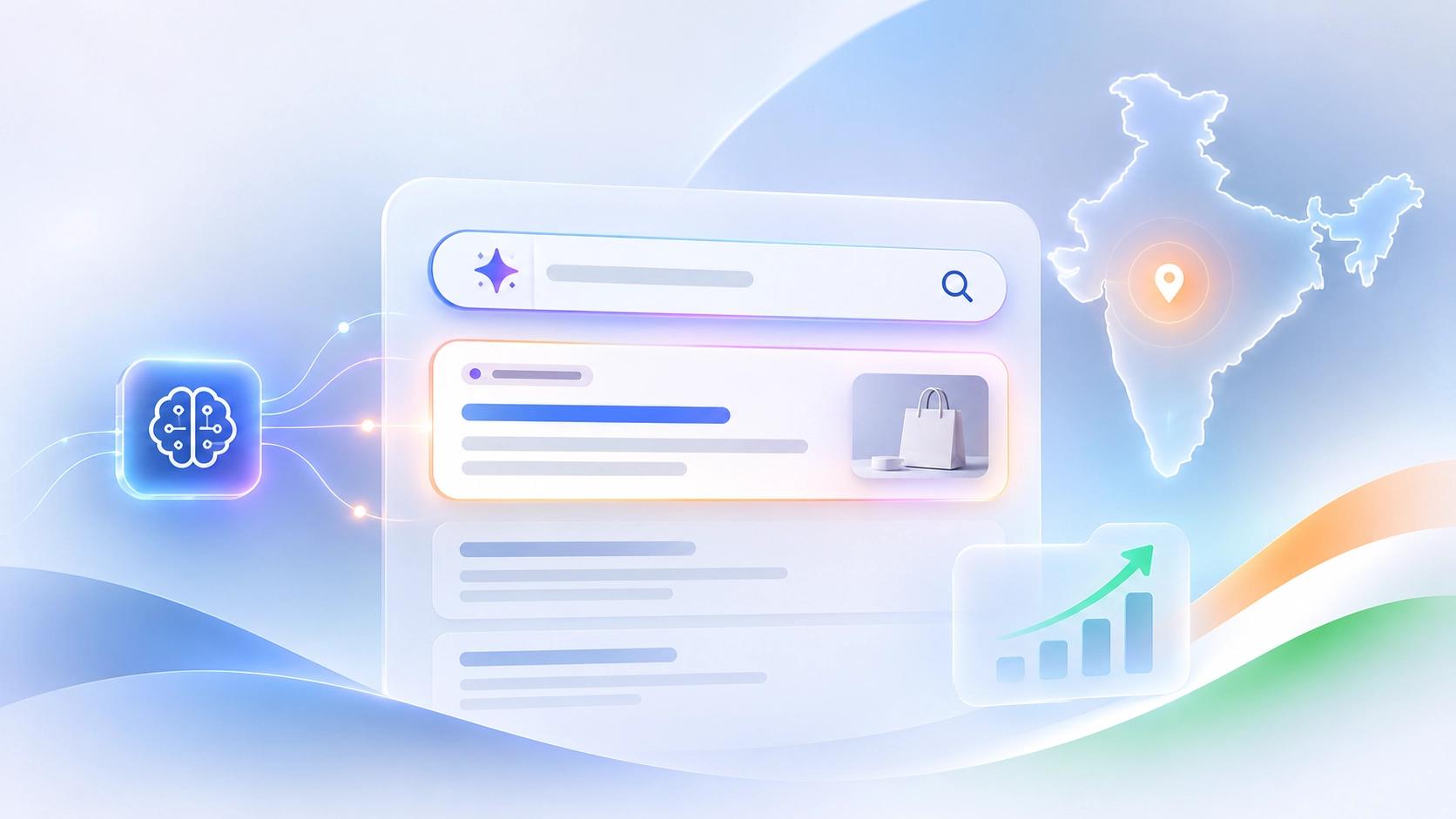
Google AI Mode ads in India create a new way for businesses to reach people as they ask detailed questions, compare products and explore services. Eligible campaigns can appear within AI-powered search without requiring a separate campaign.
What Are Google AI Mode Ads?
Google AI Mode ads are paid advertisements that can appear within or alongside AI-generated search responses when a query has commercial relevance.
People can now search with detailed, conversational questions instead of a few keywords. Google uses the wider context to decide whether a sponsored text or Shopping result is relevant. The ads remain separate from organic AI responses and are marked as sponsored.
8 Things Businesses Need to Know
Point: India rollout
What It Means: Google announced English-language AI Mode ads for India in October 2026
Point: Eligible campaigns
What It Means: Search, Shopping and Performance Max campaigns may participate
Point: Campaign setup
What It Means: No separate AI Mode campaign is required
Point: Search behaviour
What It Means: Ads can respond to detailed research and comparison questions
Point: Matching
What It Means: AI Max and broad match can extend reach across conversational searches
Point: Reporting
What It Means: Results currently appear within standard campaign reporting
Point: Organic visibility
What It Means: Paying for ads does not improve organic AI recommendations
Point: Core performance
What It Means: Relevance, tracking and landing-page quality still drive results
Read Google's official announcement for rollout details and its Google Ads Help guide for current eligibility and controls.
How to Prepare for Google AI Mode Ads Step by Step
1. Audit Your Existing Google Ads Campaigns
Review targeting, bidding, assets and conversion performance. Use campaigns that already generate qualified leads or profitable sales as your starting point.
2. Focus on Customer Search Intent
Research the problems, budgets, preferences and questions customers bring to a purchase. Use those insights in your keywords, assets and website content.
3. Test AI Max and Performance Max
Start with a controlled test rather than changing every campaign. Compare lead quality, acquisition cost and conversion performance before increasing spend.
4. Improve Your Website and Landing Pages
Clearly explain what you offer, who it serves and why it is useful. Keep pages fast and mobile-friendly, with accurate pricing, reviews, service locations and clear calls to action.
5. Strengthen Your Ads and Product Data
Use specific headlines, descriptions and images that match real customer needs. E-commerce businesses should keep Merchant Center pricing, availability and product details current.
6. Set Up Accurate Conversion Tracking
Measure enquiries, purchases, qualified leads and revenue through Google Ads, GA4 and your CRM. Do not judge performance by traffic or clicks alone.
What to Do If AI Mode Ads Are Not Delivering Results
of 06 actions
Check search terms, locations, negative keywords and brand exclusions.
How to Stay Ahead of AI-Powered Advertising
Prepare
01Point 01
Follow Google Ads announcements and review campaign controls regularly.
Point 02
Research conversational and problem-based customer searches.
Apply
02Point 03
Test AI-powered features before committing a larger budget.
Point 04
Keep human oversight of targeting, creative and lead quality.
Improve
03Point 05
Build SEO, AEO and GEO visibility alongside paid advertising.
Point 06
Focus on qualified leads, sales and revenue rather than short-term traffic.
FAQs
Frequently Asked Questions
Yes. Google announced the expansion of AI Mode ads to India on 28 October 2026. Ads within AI Mode are currently supported in English, with availability depending on search relevance, campaign eligibility and Google's ongoing rollout.
Businesses can participate through eligible Google Search, Shopping and Performance Max campaigns. There is no need to create a separate AI Mode campaign. AI Max and broad match can help Search campaigns reach additional conversational queries.
No. Google does not currently provide a dedicated AI Mode campaign or a separate placement opt-out. Businesses can continue using existing campaign controls, including negative keywords and brand exclusions.
No. Google's organic AI responses are generated independently of paid advertising. Businesses should develop their SEO, Answer Engine Optimisation (AEO) and Generative Engine Optimisation (GEO) strategies separately.